Food Photography: 10 Tips to Make Your Food Look Irresistible.
Whether you are a food blogger, restaurant owner, or just someone who loves to share photos of their meals on social media, taking great food photos is an art form.
A visually appealing food photo can make your mouth water and inspire you to try new dishes. But how do you take a photo that makes your food look irresistible?
In this post, we are going to share 10 tips for food photography that will help you take your culinary creations to the next level.
From choosing the right lighting and angles to styling your food and choosing the right props, you'll learn how to create stunning food photos that are sure to make your audience drool. Get your cameras ready, and let's dive into the world of food photography!
1. Understanding the basics of food photography
Food photography is a popular genre that has taken social media by storm. It is an art form that requires a certain level of skill and understanding. food photographer To create a compelling food photograph, you need to understand the basics of food photography.
First, you need to choose the right lighting and set up your scene. Natural light is usually the best option as it helps to create a soft, warm glow that is perfect for food photography. It is also important to pay attention to the colors and the composition of your photograph.
You want to create a visually appealing image that draws the viewer in and entices them to want to try the food. Another important aspect of food photography is the use of props. Props can help to enhance the overall aesthetic and add depth to your photograph.
Lastly, when it comes to food photography, the devil is in the details. You need to pay attention to the small details, such as the placement of the food, the texture of the food, and the overall presentation. With these basic concepts in mind, you can create stunning food photographs that are sure to make your audience hungry.
2. Choosing the right lighting
When it comes to food photography, lighting is everything. The right type of lighting can make your food look irresistible and mouth-watering, while the wrong kind of lighting can make it look dull and unappetizing.
Natural light is always the best option when it comes to food photography. If possible, try to shoot your food photos near a window where natural light can flood in. However, if natural light is not an option, you can use artificial lighting to help enhance your food.
A softbox or a diffused light source can help to evenly distribute the light and reduce harsh shadows. You can also use a reflector to bounce the light back onto your food and reduce shadows.
It is important to avoid using harsh or direct light as it can create unwanted shadows and cause your food to look unappetizing. Experiment with different lighting setups and angles until you find the perfect one to make your food look absolutely irresistible.
3. Styling your food for the perfect shot
Styling your food is an essential aspect of food photography. You want your food to look as appetizing as possible, and styling can help you achieve that.
Here are some tips for styling your food for the perfect shot:
1. Use the right props. Use dishes and utensils that complement your food and enhance its presentation.
2. Use the right lighting. Natural light is always best, but if you're shooting indoors, you'll need to use artificial lighting to create the right mood and atmosphere.
3. Consider the background. Choose a background that is simple and uncluttered, so that your food stands out.
4. Be mindful of color. Use colors that complement each other and make your food look visually appealing.
5. Play with textures. Use textures to add depth and interest to your shots. Add some garnish to your food, such as herbs or fruits.
6. Use angles to your advantage. Experiment with different angles and perspectives to find the best shot.
7. Keep it simple. Don't overcrowd the shot with too many elements. Simplicity is key.
8. Be patient. Take your time when styling your food. Don't rush the process.
9. Use natural ingredients. Natural ingredients make the best props and garnishes.
10. Practice, practice, practice. The more you practice styling your food, the better you'll become at it over time.
4. Choosing the right angles and composition
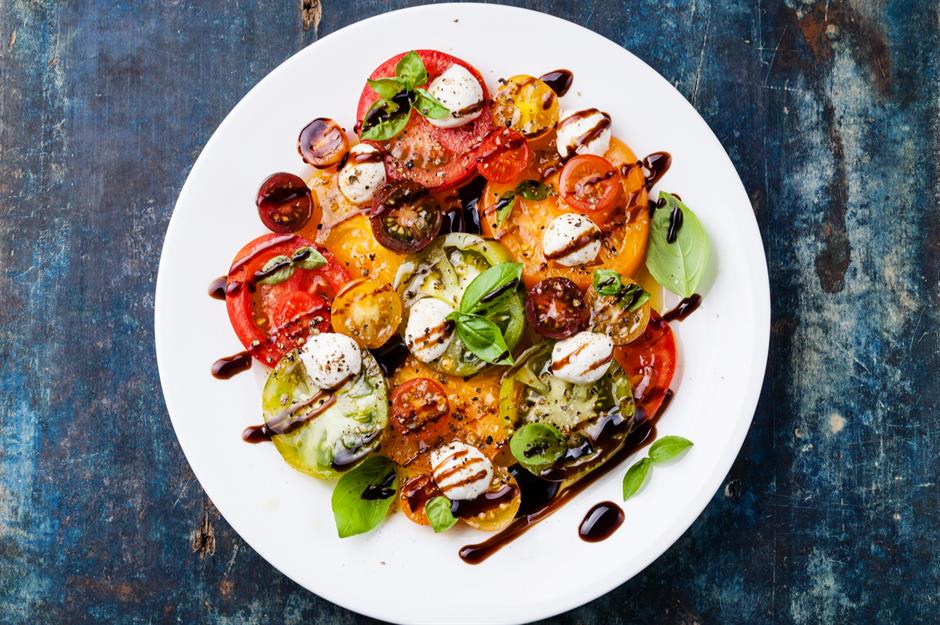
When it comes to food photography, choosing the right angles and composition is crucial in making your food look irresistible. One of the most basic techniques in food photography is the "top-down" or "flat lay" shot, which involves photographing the food from above.
This technique is excellent for showcasing patterns, textures, and the overall layout of the dish. However, it is essential to be mindful of the shadows that may be cast and to ensure that all elements of the dish are in focus. Another popular angle in food photography is the "45-degree angle," where the camera is positioned at a slight angle to the dish.
This angle is great for showing depth and dimensionality in the food, as well as highlighting any prominent ingredients or garnishes. Again, it is important to ensure that all elements of the dish are in focus and to be mindful of shadows.
In addition to choosing the right angle, the composition is also important in food photography. The "rule of thirds" is a classic composition technique that can work wonders in food photography.
This rule involves dividing the image into thirds both vertically and horizontally and placing the subject at the intersection of these lines, creating a visually pleasing image.
For example, if you were photographing a burger, you could place it in the bottom left corner of the frame, with the cheese and toppings extending out toward the upper right corner.
Ultimately, choosing the right angles and composition in food photography requires practice and experimentation. Don't be afraid to try different angles and compositions to find what works best for the dish you are photographing.
Comments
Post a Comment